

Sicily's most significant archaeological site encompasses the ruined ancient city of Akragas, highlighted by the stunningly well preserved Temple of Concordia, one of several ridge-top temples that once served as beacons for homecoming sailors. Extending for over 1300 hectares, the Archaeological and Landscape Park of the Valley of the Temples is one of the largest and most important archaeological sites in the world, and is split into eastern and western zones. Booking ahead for tickets is essential as the lineup can be intolerable. If you only have time to explore part of the site, make it the eastern zone, where you'll find the three best-preserved temples, including the 5th-century BC Temple of Juno perched on the edge of a ridge. Although partly destroyed by an earthquake in the Middle Ages, much of the colonnade remains intact, as does a long altar, originally used for sacrifices. From here, the path continues westwards, past a gnarled 800 year-old olive tree and a series of Byzantine tombs built into the city walls, to the sublime Temple of Concordia. This remarkable structure, the model for Unesco's logo, has survived almost entirely intact since it was constructed in 430 BC. In 1748 the temple was restored to its original form and given the name it's now known by. The last of the zone's temples, the Temple of Heracles, is the oldest, dating from the end of the 6th-century BC, with 8 of its 38 columns have been raised to a standing position.
The main feature of the western zone is the crumbled ruin of the Temple of Zeus, which would have been the largest Doric temple ever built had its construction not been interrupted by the Carthaginians sacking Akragas — the incomplete temple was later destroyed by an earthquake. A short stroll away, four columns mark the Temple of the Dioscuri, a 5th-century BC temple that was destroyed also by the same earthquake but partially rebuilt in the 19th-century. Just behind is a complex of altars and small buildings believed to be part of the 6th-century BC Sanctuary of the Chtoniche Gods. In a natural cleft near the sanctuary is the Garden of Kolymbetra, a lush garden of olive and citrus trees interspersed with more than 300 species of Sicilian plants. Running out of steam after almost 4 hours exploring the Agrigento temples in the hot Sicilian sun, we were thrilled when a tiny open-air tram ambled by as we were about to embark on the long 3 km walk back to the park entrance. For a modest €3 we gleefully hopped on, smiling all the way.
Set in the heart of the the UNESCO world heritage archaeological park of the Valley of the Temples is Ristorante La Terrazza degli Dei — The Terrace of the Gods — in Hotel Villa Athena, which serves a Sicilian-inspired menu within lush gardens and epic landscape. Recommended by friends of ours, La Terrazza was wonderfully convenient for lunch after a morning trekking trough the temples in sweltering 38°F heat. Originally an 18th-century prince's residence, Villa Athena is now a luxury hotel set within the the Unesco World Heritage Site of Valley of the Temples with a spectacular view overlooking the Temple of Concordia. Having made reservations, we were seated at a wonderful table with an unobstructed view of the iconic Greek temple and surrounded by a lush garden with soaring palm trees. Beginning with a chilled bottle of 2015 Etna Bianco as we looked over Chef Nino Ferrero's menu of modern Sicilian cuisine, we were very content to sip our wine and drink in the intoxicating view of this majestic valley.

The Temple of Juno in Agrigento's Valley of the Temples is a Greek doric temple built in the mid 5th-century BC, was partly destroyed by an earthquake in the Middle Ages, but much remains intact

Temple of Concordia, emblem for the UNESCO logo, has survived almost entirely intact since it was constructed in 430 BC

Temple of Concordia, emblem for the UNESCO logo, has survived almost entirely intact since it was constructed in 430 BC

The Temple of Concordia is one of the best preserved outside of Greece

The temple was converted into a Christian basilica in the 6th century visible by the arches along the nave

Apart from the Parthenon, the Temple of Concordia is the best preserved Doric temple in the world

The ancient almond and olive grove

Fichi d'India, or Prickly Pear cactus fruit, are found throughout Sicily

Portion of the original wall of the ancient city of Akragas

Walking along the ancient walls are a series of arcosolium tombs and numerous small underground burial chambers, into which mortuary chests and arcosolium tombs were dug

Early Christian necropolis

Portion of the old city wall in the olive and almond grove

Archaeologists exploring a new burial tombs that they just discovered

Entrance to the Villa Aurea gardens full of Mediterranean trees and shrubs with exotic and rare species growing among the fragrant hedgerows of myrtle, rosemary and lavender

Just inside the garden gates

Flowers in blossom in Villa Aurea garden

The gardens were partly built on the remains of an old Paleo-Christian necropolis with hypogea and tombs which can still be seen today

A series of paths wind through the Villa Aurea Garden

Steps down into lower burial chambers

Australian mimosa
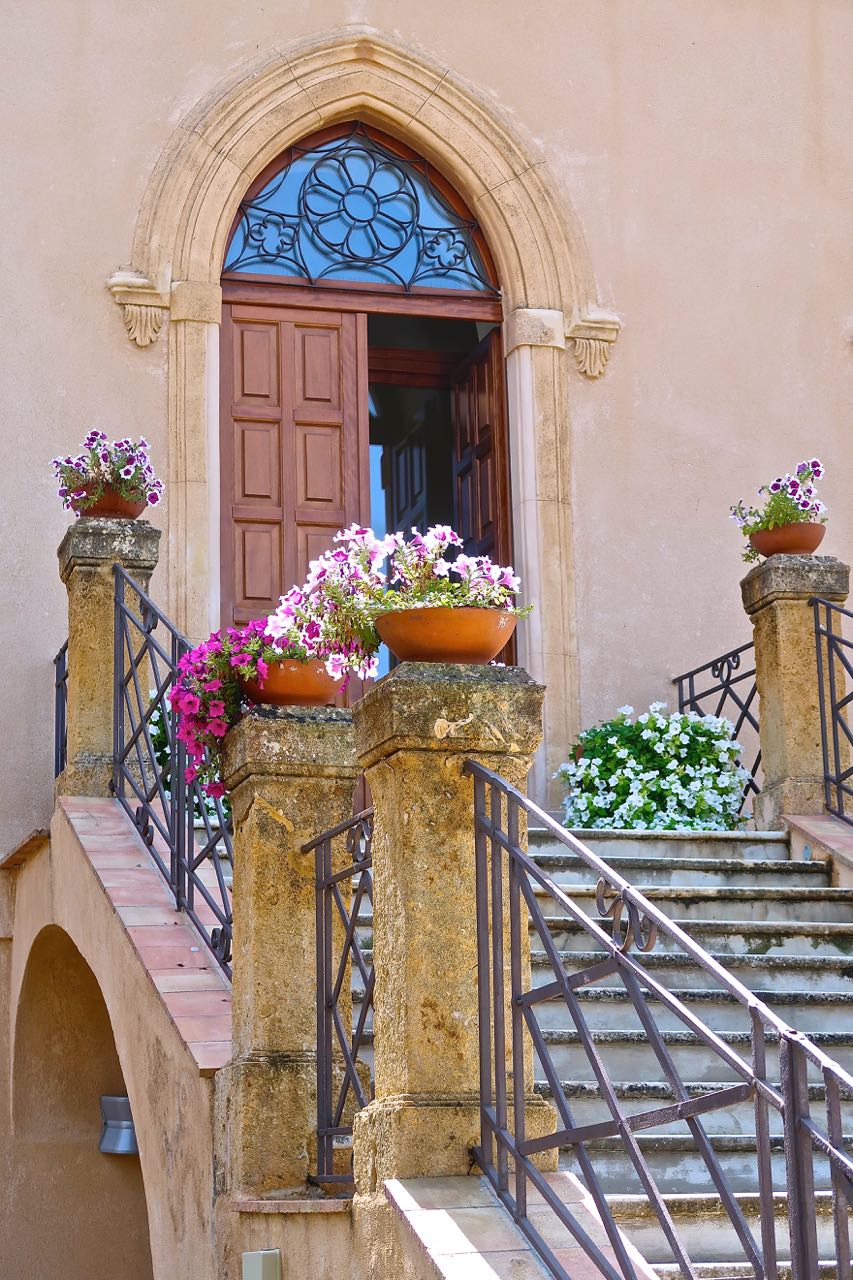
Villa Aurea was the residence of Sir Alexander Hardcastle, who acquired the country estate located between the Temple of Concordia and the Temple of Heracles, at the end of the 19th-century

Pretty window vignette of Villa Aurea

Magenta Mandevilla in bloom

The Temple of Heracles built in the Doric style around 500 BC was destroyed by the Carthaginians, but was later rebuilt by the Romans only to be toppled again by an earthquake

Temple of Heracles with discarded pillars used in its construction

Fallen column with hole in the centre as evidence how the temples were constructed

Some of the temples of the valley lie in ruins

Sample of mechanism used to transport carved tufa in the building of the temples

The Temple of the Dioscuri was built at the end of the 5t-century BC in homage to the twins Castor and Pollux, but today only four columns remain which hold up one corner of the entablature

Remains of the Temple of Zeus would have been the largest Doric temple ever built had its construction not been interrupted by the Carthaginians sacking Akragas

The lush Garden of Kolymbetra with olive and citrus trees interspersed with more than 300 species of indigenous plants

Ristorante La Terrazza degli Dei in the elegant Hotel Villa Athena is the only restaurant nestled in the heart of the Valley of the Temples

Stepped entrance to Ristorante La Terrazza degli Dei from Bar Federico II on the hotel's upper level

Sicilian ceramic bowl from Caltagirone on the entry table

The incomparable view of the Temple of Concordia from the restaurant

The 'carta dei vini' of Sicilian wines

2015 Cottanera Etna Bianco made with 100% carricante grapes

Chilled in a wine bucket brought to our table

Chef Nino Ferrero's menu of modern interpretations of traditional Sicilian dishes

Villa Athena organic olive oil

Sliced baguette to enjoy with the organic olive oil

Crudo di gambero rosso "cunzato": Raw Red Prawn "cunzato" seasoned with extra virgin olive oil from our production with onions and cucumbers

Involtino di carne con caponata: Veal Rolls with caponata

Caponata

insalata di mare: Shellfish Salad with lobster, scampi, red and white shrimp


Villa Athena Sicilian Caponata
Serves 10
10 eggplants
vegetable oil, for cooking the eggplants
1 3/4 lb celery
olive oil
2 1/2 lb onions, cut in half and sliced
2/3 lb green olives, pitted and chopped
7 oz capers, rinsed and drained
2 2/3 lb fresh tomato sauce
7 oz tomato paste
salt and pepper
3/4 cup + 2 tbsp white vinegar
3/4 cup + 2 tbsp granulated sugar
Candied Cherry Tomates:
20 cherry tomates
1/4 oz fresh marjoram
1/4 oz fresh thyme
1/4 oz fresh oregano
2 cups icing sugar
Preheat the oven to 200°F for the candied cherry tomatoes. Fill a large bowl with cold water and a handful of ice cubes. In a saucepan, bring water to the boil, add the tomatoes, and immediately transfer them to the bowl with the ice water. Using your fingers, remove the skin, then cut the tops off and discard.Spread the tomatoes and the remaining ingredients in a large baking dish, mix well, and dehydrate in the oven for 2 hours until the tomatoes are soft and a little shrivelled. Once cool, keep the tomatoes in a jar filled to the top with olive oil.
Rinse the eggplants and remove the stems and the ends. Peel the eggplants (optional), cut off the skin as thinly as possible. Cut the eggplants into large cubes and cook them in a generous amount of hot vegetable oil until golden and soft. Transfer to kitchen paper to remove excess oil and set aside.
Trim the celery and remove all the leaves and discard them. Cut the celery into small pieces and blanch in salted water until tender. Heat a generous amount of olive oil in a large, heavy pan and cook the onions until golden and soft. Add the celery, olives, and capers, cook for a few minutes, then add the tomato sauce. Season with salt and pepper and cook over medium heat. When it’s all soft and thick, add the eggplant to the sauce and simmer until soft and mushy.
In a medium saucepan, add the sugar and vinegar and let the sugar dissolve over medium heat, then pour the vinegar over the caponata. Let it simmer until the mixture is thick. This dish is best eaten cold, topped with candied cherry tomatoes, and perhaps capper berries, a sprig of basil and slice of dried eggplant for the full Villa Athena presentation.


