
Wednesday, November 13, 2019

Villa Romana del Casale: An Archiectural Gem


One of the most precious jewels in Italy, Villa Romana del Casale is an ancient Roman estate located outside Piazza Armerina in the Sicilian countryside. An architectural gem, the villa has survived earthquakes, floods, fires and the fall of the empire with its impressive collection of mosaics intact, and remains one of the most valuable historical and artistic sites connected to the late Imperial age. One of the richest and largest collections of Roman mosaics in the world, Villa Romana del Casale has been a UNESCO World Heritage Site since 1997. Likely built in the 4th-century, the building has an intricate layout with more than 50 rooms and a sumptuous bath complex, signifying the wealth and power of its owner. The Villa was built in four main sections: the main entrance with its thermal baths, a peristyle with guest rooms and living area, the private rooms of the owner, complete with basilica - public hall - and a dining area with round courtyard. Once buried under centuries of mud and lava, the sprawling 11,482-acre villa survived in nearly pristine condition until it was unearthed by archeologists in the early 19th-century, carefully restored and finally opened to the public in 2012.

The mosaics depict a range of scenes of life both on and off the estate. Images of the family life of the estate’s owners, likely a wealthy high-level senatorial aristocrat who traded in exotic animals, which was a big business back when Rome entertained its masses with arenas filled with wild beasts and gladiators, decorate one room; another is covered in images of bikini-clad women competing in sporting activities, famously called the 'Chamber of the Ten Maidens'; and in one long corridor - 'The Great Hunt Corridor' - the entire floor is decorated with illustrations of exotic animals in an ornate African hunting scene; while others pay homage to mythology and the epics of Homer. The house and mosaics show a North African influence, leading scholars to believe that African artisans did the tile work, as they were the most accomplished in the empire. One of the richest and largest collections of Roman mosaics in the world, Villa Romana del Casale was acclaimed as a “supreme example of a luxury Roman villa” by UNESCO. A masterpiece of human creative genius, Villa Casale is an architectural gem, and one of the most spectacular sites we visited in Sicily.


Valerina was our guide for the day and brought Villa Romana del Casale to life for us,
with her depth of knowledge and passion for the UNESCO site

Wood fired furnaces heated the floors and water of the Villas thermal baths

The raised floors in the baths allowed hot water to flower underneath and heat the spa

Original layout of Villa Romana del Casale, one of the largest villas surviving from Roman times

The original covered entrance to the Villa with beautiful mosaics

Original untouched fresco from the 4th-century

Small coloured tiles were used to detail the main subject, which was a highly prized task and given to senior artisans to complete

Larger tiles were used for geometric designs, a task usually given to a novice

Mosaics were used to detail the floors while frescoes decorated the walls, 
always in the same colour palette

The mosaic pavement of the colonnade which runs around the peristyle is decorated with the heads of 162 European and African animals framed by laurel wreathes

Lions head detail

Surrounded with a magnificent mosaic pavement, the open colonnade of the peristyle, which is the central part of the Villa, allowed light into the facing main floor rooms

From the peristyle there is access to the thermal baths and latrine 

Mosaic of an aristocrat dressed in robes ready for the thermal baths
decorates the floor of the entrance to the caldarium, tepidarium and frigidarium

Funded by UNESCO, Villa Casale is protected by a raised path for visitors to tour the complex,
and a covered roof which emulates the kind of roof the villa would have had

Room of the Four Seasons was used as an antechamber by important guests

Decorative duck motif

Image of a Roman aristocrat in the guest room

Whimsical fish mosaic

Room of the Little Hunt

Hunters spearing a wild boar

Atrium of the Fishing Cupids

Detail of cupids fishing

Geometric mosaic design used for servants quarters which was a less expensive motif

The famous "bikini girls" mosaic

The bikini-style bottom was actually a wrapped loincloth made of cloth or leather used by athletes
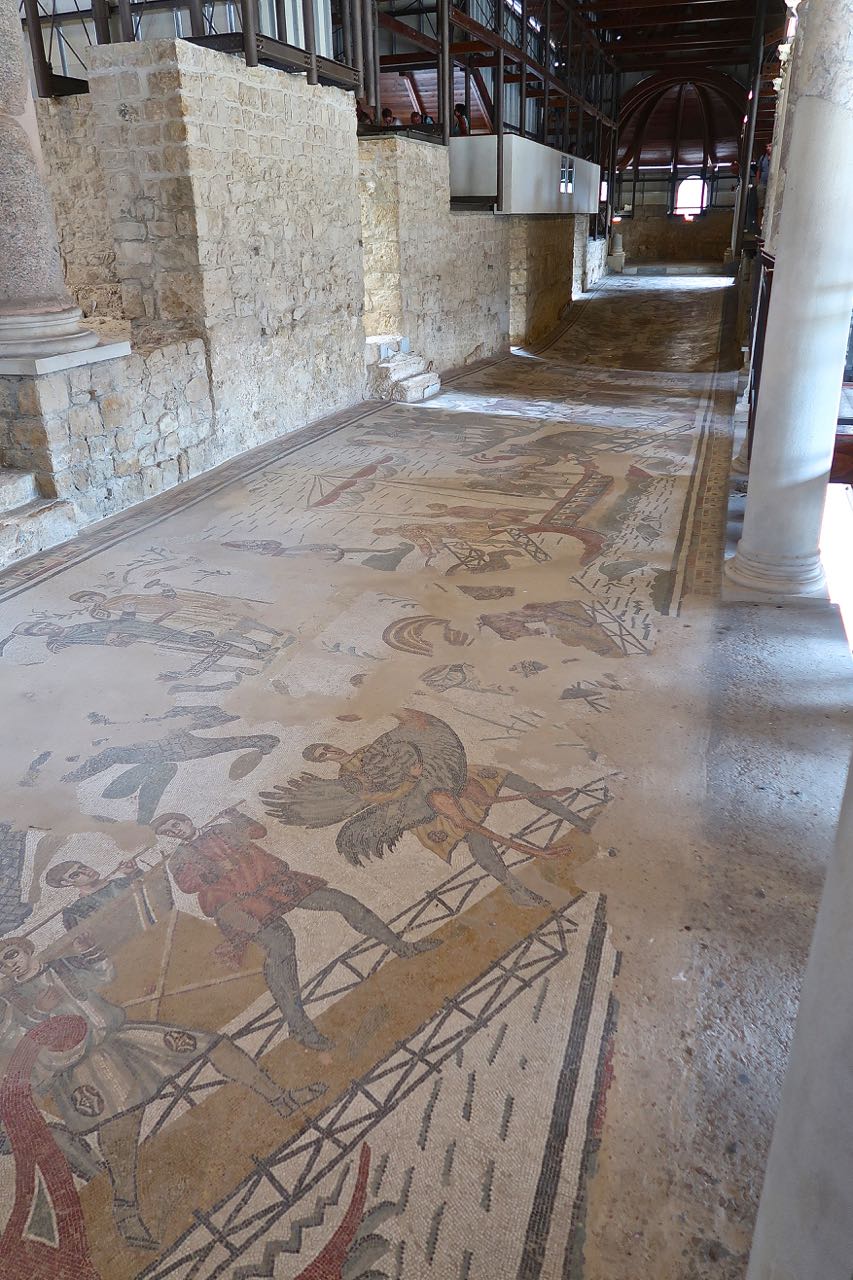
The spectacular 200-foot long Hall of the Great Hunt is the greatest wonder of the villa, and depicts the detailed capturing and shipping of exotic animals which was a big business back when Rome so creatively entertained its masses with arenas filled with wild beasts and gladiators

The other end of the Great Hunting Corridor

Exotic beasts were caught and transported by ship from distant lands

Hunters on the Great Hunt mosaic

Tiger and cub

Mosaic of child on chariot in the children's nursery at Villa Romana

Mosaics of fishing boats in the atrium at the end of the Hunting Corridor
with original frescoes on the wall

Child's Bedroom with scenes of them hunting but also playing with animals

Detail of child playing with birds in a garden with flowers




Monday, November 11, 2019

Belmond Villa Sant'Andrea: Elegant Buffet Breakfast


Arriving for breakfast on our last morning at the Belmond Villa Sant'Andrea after a wonderful nights sleep, we were seated at a lovely bright table overlooking the water. With an incredible buffet of delicious Sicilian fruits, fresh baked pastries, breads, cheeses and homemade jams and preserves to choose from, there was also an a la carte menu with a selection of delicious egg dishes. Served in a gorgeous collection of Sicilian ceramic bowls, plates and cake stands, the Belmond breakfast buffet was a sight to behold. With plans to visit Piazza Armerina, site of the famous Villa Romana del Casale known for its glorious mosaics and considered to be the most beautiful and best-preserved in the world, we enjoyed a delicious breakfast, then bid a fond farewell to Taormina and the wonderful staff at Sicily's legendary Belmond Villa Sant'Andrea.


Ristorante Oliviero bathed in the morning sun

Served in gorgeous Sicilian ceramic bowls, plates and cake stands, the buffet was a sight to behold

Delicious housemade cheeses

For a healthy start to the morning there were nuts, dried fruit, yogurt and preserves

Lovely selection of cakes, tarts and breads

Crostata di cioccolato

Crostata di albicocche

Local tomatoes, bufala mozzarella, homemade ricotta and selection of house cured prosciuttos

Scrambled eggs with grilled mushroom, tomato and fresh basil

A traditional 'Full English' with fried eggs, sausage, bacon, grilled mushroom and tomato


Pol­po alla gri­glia con vel­lu­ta­ta di pe­pe­ro­ni
Serves 4
Recipe courtesy of chef Agostina D'Angelo


3 1/2 lb octopus
3 oz yellow peppers
3 oz red peppers
3/4 lb new potatoes
1 1/2 oz butter
3 garlic bulbs
Fresh parsley
3/4 oz sugar
4 tsp white wine vinegar
1 1/2 oz onion
Olive oil, to taste
Salt, to taste


OCTOPUS: Place the fresh octopus in a sieve and cook it in water and salt for 18 minutes, then leave to rest in the water with the heat off for about 30 minutes then take it out. Once cooked, remove the head and cut the tentacles in half, opening them up. Then put the tentacles on the grill for a few minutes. Finish in a pan with butter, garlic and parsley.

PEPPER CREAM: Braise the chopped peppers with onion and garlic and add white wine vinegar, sugar, butter and salt. Once cooked and dried, blend them until you get a velvety-looking cream.

PREPARATION OF THE DISH. Put the pepper cream  on the bottom of a plate and place the octopus tentacles on top, accompanying everything with some previously grilled boiled potatoes. Finish with a little olive oil.


Friday, November 8, 2019

Belmond Villa Sant'Andrea: Dinner & Cocktails


With its exclusive location on the Bay of Mazzarò, one of the most beautiful in all of Italy, the elegant Belmond Villa Sant'Andrea is the place to be for a smart cocktail or pre-dinner aperitivo on the grand outdoor terrace. Built in 1830 by an aristocratic family and surrounded by lemon trees, bright red geraniums, and old stone walls, the Sant'Andrea retains all the charm of a private residence. The atmosphere is casual but refined. Nestled under a canopy of soaring pine trees and stately royal palms, the outdoor covered marble bar is home to head barman Stefano Chiavetta who created a refined cocktail list with Prohibition-era flair. The hotel which turned 100 years old this year and still preserves its 1920s charm, became the inspiration for Stefano's colourful concoctions. Arriving for a cocktail before dinner at Ristorante Oliviero, we sat at a lovely table overlooking the water and enjoyed the music from a live 1930s-era band from a wedding being celebrated at the hotel with songs like "It's Wonderful" — and it was.


Stefano Chiavetta is Head Barman at the Belmond Sant'Andrea

Each of Stefano's cocktails have a 1920s Prohibition-era theme,
when the allure of outlaw liquor inspired waves of colorful concoctions 

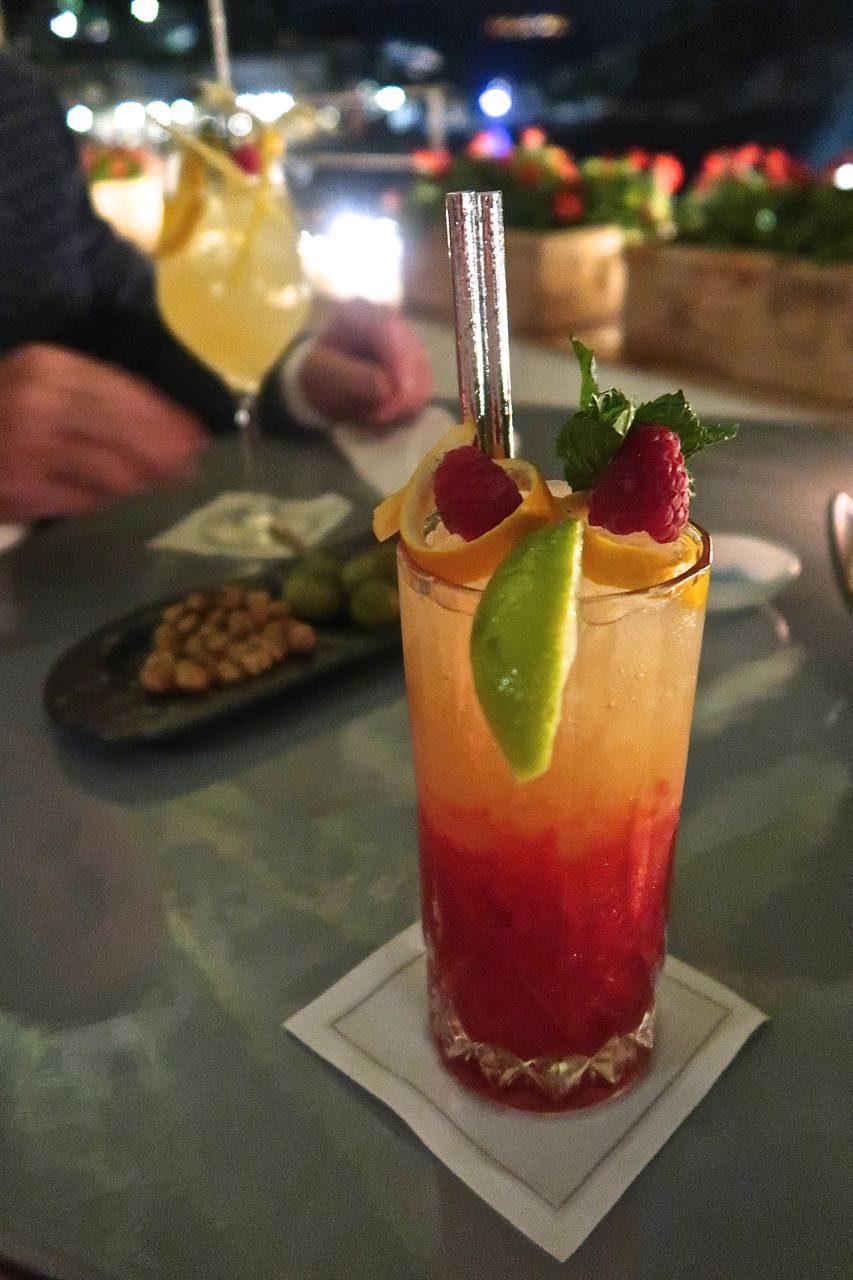
Stefano's Nikito Cocktail

Belmond Villa Sant'Andrea terrace bar

View overlooking the bay with lights of a nearby hill town twinkling in the distance
and the sound of the waves lapping on the beach 

The Belmond Cocktail made with gin, champagne, grapefruit juice and liquore di fiche d'india made from Sicily's iconic prickly pear cactus fruit we saw everywhere

Sicilian potato chips

Local Sicilian hazelnuts, olives and pistachios

The Bee's Knees cocktail made with orange and lemon juice, local Sicilian honey and gin,
and was originally created during the days of prohibition

Amuse-bouche of whipped homemade ricotta with pistachios and fresh garden herbs

Warm Arancine amuse-bouche

An American couple getting married at the Belmond the evening we were there,
with a fabulous live band playing 1930's classics during cocktail hour

Michele Audino is the Manager of Ristorante Oliviero

Warm homemade baked rolls

 Margo olive oil from the Nocella olives of Etna harvested in the autumn in the family Olive Grove

Amuse-bouche of Sicilian melon, shrimp, pistachios and garnished with dill

The Benati Pietra Marina Etna Bianco we enjoyed at lunch was such an exceptional wine, we ordered it again for dinner

Spaghetti alla chitarra trafilati al bronzo con vongole veraci; Handmade bronze durum wheat spaghetti with local fresh clams

Red Prawn Risotto - it was so good at lunch, I had to order it again

Cassata Siciliana

Homemade Chocolate Gelato and outrageously delicious


Ta­glio­li­ni Neri con Bot­tar­ga di Ton­no su vel­lu­ta­ta di zuc­chi­ne
Serves 4
Recipe courtesy of chef Agostina D'Angelo

1 large egg yolk
8 oz 00 flour
2 oz semolina flour
5 grams cuttlefish or squid ink
11 oz zucchini
4 pumpkin flowers
1 onion
2 garlic bulbs
2 oz tuna bottarga
3 tbsp olive oil
4 tbsp tomato sauce
2 tsp red wine
2 tsp brandy


ZUCCHINI CREAM: Wash, trim and slice the zucchini into strips. At the same time, sauté an onion in a pan with olive oil and then add the zucchini and braise for about 3 minutes, adding salt and a quarter of the garlic. Once ready, blend everything and put in a pan to cool to keep the colour.

SAUCE FOR THE PASTA: Fry a crushed garlic clove for a few minutes with olive oil then add the finely chopped tuna bottarga. Sauté for about 20 seconds and blend with red wine and brandy. Once all the alcohol has evaporated, add the leaves of the zucchini flowers cut into strips and the zucchini flowers previously fried in boiling oil at 350°F. Finish with the tomato purée and turn off the heat.

TAGLIOLINI: Mix the two flours, adding the egg yolk and squid ink until the mixture is homogeneous and compact. Roll out the dough with a rolling pin and then roll it up on itself. Finally cut into thin strips.

PREPARATION OF THE DISH: Cook the tagliolini in boiling water for 2 minutes and then drain; put in the pan adding the sauce previously obtained from the tuna bottarga. Stir it all with olive oil. Then put the zucchini cream on the bottom of the plate and place the tagliolini on top. Garnish the dish with small amounts of tuna bottarga and some pumpkin flowers.