Friday, October 26, 2018

Sukiyabashi Jiro: Michelin Sushi in 20 Minutes


The world's most famous sushi restaurant, Sukiyabashi Jiro has been awarded three Michelin stars for 11 years running, and master chef Jiro Ono now 93, still makes the sushi himself at the counter with his son Yoshikazu. World-famous thanks to the 2011 documentary Jiro Dreams of Sushi by David Gelb, this tiny 10-seat restaurant tucked away in the Ginza Station is one of the most sought-after reservations in Japan. Despite his advancing age, Jiro still takes the subway to work every morning and oversees nearly every facet of his restaurant, from planning the seating arrangements to the menu, but has cut back in recent years. Not only has he decided to give up smoking, but also purchasing high-quality fish every morning at the Tsukiji Fish Market in Tokyo. Hi son Yoshikazu now makes the daily bicycle ride each morning to buy the best fish, but also visiting a special rice dealer who only sells his best grains to Jiro because he believes he’s the only chef in the world who can properly cook his rice. 

Only six people work with Jiro: Yoshikazu; another shokunin, or sushi chef; three apprentices, who must train with Jiro for a decade before attaining the status of shokunin; a woman who handles all the accounting and the cash register, and a woman who cleans the restaurant. Having amazingly secured a reservation at Sukiyabashi Jiro through our hotel, we were emailed a list of 10 things we must and must not do, including bringing our passport as proof of identification, and absolutely no photographs. They also warned that the service is fast, but didn't realize that by the time we sat down promptly for our 7pm reservation, we would be finished twenty minutes later. I was still chewing my last piece of sushi and the hostess asked us to move. I turned to her, while still chewing, and said "I'm not finished yet." Not missing a beat, she stayed where she was, waited until I swallowed and told us to move to a small table where a slice of musk melon was served. By 7:30pm we were shown the front door and made our exit $990 lighter. Was it worth it? Absolutely not. 


Thursday, October 25, 2018

Sushi Kanesaka: Michelin Star Omakase in Ginza


A passionate defender of Japanese culinary traditions, Chef Shinji Kanesaka is one of the most celebrated sushi chefs in Japan, having started his training at Kyubey, one of the oldest and highly-regarded sushi restaurants in Tokyo. After 10 years of rigid training, Chef Kanesaka launched his first restaurant Sushi Kanesaka in the highly competitive Ginza district of Tokyo in 2000, and today with 2 Michelin stars tucked firmly under his belt, is considered a mecca for the finest sushi by his legion of fans, which include country leaders and international celebrities as well as famed Kabuki actors and actresses.

What sets him apart from his counterparts and marks him as a culinary prodigy is his special Japanese shari or rice, and the best selection of fish and seafood handpicked by Chef Kanesaka from the world-renowned Tsukiji Market in Tokyo.
His Edo-style sushi is served in the omakase way, which literally means “I’ll let you decide”, as the ultimate expression of trust in the expertise of the chef. At Sushi Kanesaka, only the finest seasonal product is selected to create the sashimi, nigiri and maki that showcase the chef’s creativity, insight and culinary skills. The pure, distilled quality of his food as well as a certain inexplicable charm in both man and restaurant is the key to his success. “I want to make sushi that I personally want to eat.” At Kanesaka, Chef Kanesaka believes that dining on the best sushi is a holistic experience, one that is best delivered with art and soul. Okanesaka’s vision is to create a once-in-a-lifetime dining experience, every single time. Mission accomplished.


With two Michelin stars, Sushi Kanesaka offers one of the best dining experiences in Tokyo

Tucked away in the basement of a building on an unassuming street, Sushi Kanesaka is very small with only a dozen or so seats, so reservations are essential

Delicious fresh corn Chawanmushi (Japanese egg custard)

Grilled Ayu

The grilled Ayu is served with tade-zu, a vinegar and sake sauce with fresh tade leaves

Michelin-starred Chef Shinji Kanesaka preparing our Flying Fish sashimi

Flying Fish Sashimi with sesame seeds

Delicate slices of Seabream (Tai)

Chef Kanesaka adding a squeeze of yuzu on the Tsubugai

Hokkaido White Whelk with yuzu (Tsubugai)

Grilled squid

Ikura

Japanese Hairy Crab from Hokkaido (Kegani)

Bonito

Chef Kanesaka skillfully slicing the lean tuna

Akamai (lean tuna)

ChÅ«toro (medium fatty tuna)

Hot sencha tea

Sake cup with calligraphic motif

Junmai Daiginjo Sake

Ika (squid)

Chef Kaneskaka creating the baby shrimp sushi

Diced sweet baby shrimp topped with pale yellow Kazunoko roe

Gizzard Shad (Kohada)


Striped Horse Mackerel

Horse Mackerel (Aji)

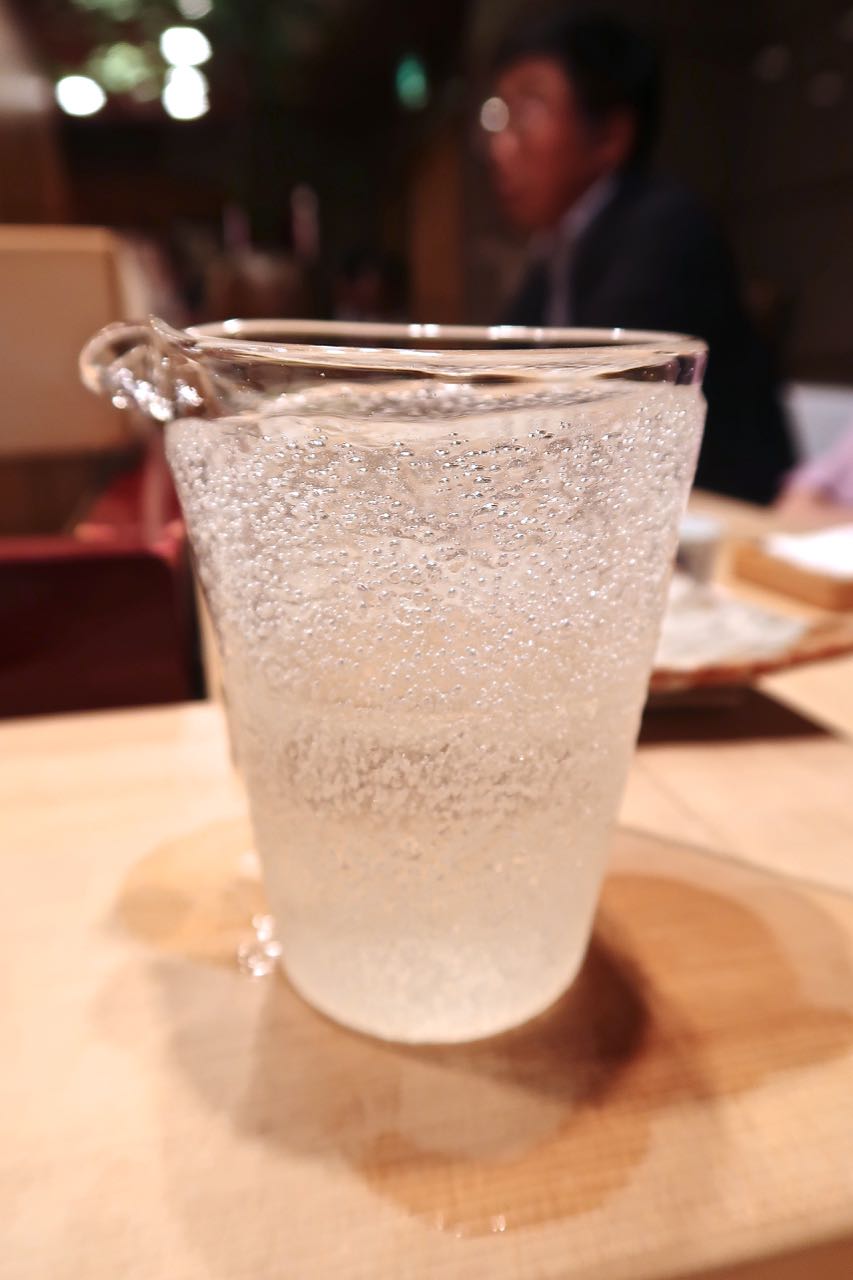
Lovely cold Asahi Beer in a beautiful engraved glass

Japanese Flay Shell Pen Clam (Tairagi)

A plate brimming with Ark Shell Clams, ready for Chef Kanesaka to begin preparing 
our next Omakase offering

Akagi (Ark Shell Clam is also called Red Clam)

A wooden box of the freshest and plumpest Uni from Hokkaido

Sweet, creamy and bursting with umami flavour, the uni tasted like it just came from the sea

Grilled Anago

Tamago

Tekkamaki hand roll

The supremely talented and wonderfully friendly Chef Shinji Kanesaka
made our evening at his restaurant a night to remember


Wednesday, October 24, 2018

Sumida Hokusai Museum: Ukiyo-e Woodblock Prints


Opened in November 2016, the ultra-modern Sumida Hokusai Museum is dedicated entirely to Edo-era Sumida's most famous son – ukiyo-e superstar Katsushika Hokusai, who single-handedly defined Japanese art for the world in the nineteenth century. A temple to the Japanese artist's work, this small but excellent museum features Japanese wood block prints of "the floating world" including the famous Great Wave off Kanagawa and Red Fuji. Designed by Kazuyo Sejima, the five-story cultural landmark broken up by angular cut-outs designed to bring light into the structure with bright, lofty exhibition spaces, features seven permanent exhibits as well as a special exhibition of 'Hokusai’s Bridges' which opened while we were in Tokyo.

The first section of the exhibition presents bridges depicted by Hokusai and his pupils including ”Remarkable Views of Bridges in Various Provinces”, a series regarded as one of Hokusai’s masterpieces. In the second section, the focus was on bridges in Sumida City and how bridges developed from Hokusai’s day to the present day. For most of his life, Hokusai took his inspiration from everyday life, creating lively, colourful depictions of people and animated street scenes, marked by a lighthearted, often humorous, mood. A brilliant artist, ukiyo-e painter and print maker, Hokusai is thought to have produced 30,000 woodcuts and paintings during his life, with much of his most famous work not even begun until he was in his 70s. The first Japanese artist to be internationally recognized, Katsushika Hokusai continues to inspire artists around the world.


'Telescope' from Hokusai's series 'Seven Habits' from 1801-1804

Bound prints of 'Thirty-Six Views of Mount Fuji

Hokusai Sketches, Volume 13 with image of pouncing tiger 

The Great Wave, created by Katsushika Hokusai in 1831, remains the most iconic 
and reproduced non-Western image in art

'Yoshitsune Uma arai no taki Falls at Yoshino in Yamato Province' 
from the series 'A Tour of Waterfalls' from 1833

Fine Wind, Clear Morning, also known as Red Fuji, is a wood block print by Hokusai, 
part of his Thirty-six Views of Mount Fuji series from c. 1830 to 1832

Interior of Sumida Hokusai Museum with interactive touch-screens

Lifesize wax model of Hokusai at work in his studio

'Hokusai's Bridge: Sumida Bridge - The Full Span' special exhibition at the Sumida Museum

Wondrous Views of Famous Bridges in All the Provinces: Kintai Bridge, Suo Province from 1834

The Suspension Bridge on the Border of Hida and Etchū Provinces

Old View of the Pontoon Bridge at Sano in Kōzuke Province, 
from the series Remarkable Views of Bridges in Various Provinces

The Arched Bridge at Kameido Tenjin Shrine, 
from the series Remarkable Views of Bridges in Various Provinces

Ancient View of Yatsuhashi in Mikawa Province 
from the series Remarkable Views of Bridges in Various Provinces

Bridge at Fukui in Echizen Province, from the series 
Remarkable Views of Bridges in Various Provinces

Koume Embankment, from the series One Hundred Famous Views of Edo,
by Utagawa Hiroshige