Monday, October 21, 2013

West African Chicken Mafé in Peanut Sauce


Mafé is a famous and popular West African dish, known by many names, including groundnut stew, mafe, maffé, maffe, sauce d'arachide, sauce z'ara, tigadèguèna and tigadene. Variations of the dish appear in the cuisine of nations throughout West and Central Africa, particularly in Senegal, Gambia, Mali and the Ivory Coast. It's a delicious stew made with chicken, fish, or lamb simmered in a fragrant sauce thickened with ground peanuts and a colourful combination of mixed vegetables. Traditionally, the stew is made with raw peanuts roasted over charcoal fires then ground by hand into a flour, which I'm sure makes a wonderful sauce but sounds enormously labour intensive. Peanut butter is a much faster and easier substitute. You can make your own peanut butter or use a natural version, minus the stablizers and sugar found in many commercial brands, to get the right silky texture and pure peanut flavour. 


Chicken thighs marinated in a spice rub of garlic, salt, cayenne, minced shallot and vegetable oil

The chicken is lightly browned on both sides in a non-stick skillet

Once lightly browned and cooked through, the chicken is set aside


Recipes for West African Stew vary wildly, but commonly include chicken, tomato, onion, garlic, cabbage, and leaf or root vegetables. In the coastal regions of Senegal, Mafé is frequently made with fish. Other versions include okra, corn, carrots, cinnamon, hot peppers, paprika, black pepper, turmeric, and other spices. Mafé is traditionally served with white rice in Senegambia, fonio in Mali, couscous in West Africa and the Sahara, or fufu and sweet potatoes in the more tropical areas, such as the Ivory Coast. A variation of the stew, Virginia Peanut Soup, even traveled with enslaved Africans to North America in the early 1700s. The recipe for Mafé, in true African style, can be tweaked according to what ingredients you have on hand, by adding carrots, squash or sweet potatoes to the dish, in lieu of meat or in addition to it. Served with rice, chapati and sautéed greens such as Sukuma Wiki, this sweet and savoury West African Stew comes together with mouthwatering results.


Finely chopped carrot, red pepper, green pepper and onion

The chopped vegetables are added to the skillet with chopped jalapeño pepper, 
garlic and a tablespoon more vegetable oil

The mixture is sautéed over medium-high for 5 minutes until the vegetables become soft

Four cups of chicken broth is added and the mixture is simmered for 20 minutes

The remaining peanut sauce ingredients are then added: peanut butter, tomato paste, chopped tomato, grated ginger, coconut milk, fresh thyme and the browned chicken pieces

Simmered over medium-low for about an hour, the sauce thickens and becomes 
a lovely and aromatic with a wonderful saffron hue

Garnished with chopped cilantro and a drizzle of coconut milk, the chicken is ready to be served 

Served over Basmati rice and a flurry of chopped cilantro


West African Chicken in Peanut Sauce
Serves 6

4 lb chicken pieces, such as thighs, legs or breasts
2 tbsp vegetable oil

Spice Rub:
1 tsp salt
1 tsp ground black pepper
2 tsp chopped garlic
1 1/2 tsp minced shallot
1 1/2 tsp ground cayenne pepper, or to taste

Peanut Sauce:
1 small yellow onion, finely diced
1 small red bell pepper, seeded and finely diced
1/2 green bell pepper, seeded and finely diced
1 carrot, finely diced
1 garlic clove, minced
1 tsp finely diced and seeded jalapeño pepper
4 cups chicken broth or stock
1/2 cup smooth peanut butter
1 tbsp tomato paste
1/2 tomato, seeded and diced
1 tsp chopped fresh thyme
1 tsp peeled, grated fresh ginger
1/2 cup coconut milk
1/2 tsp salt
1/2 tsp freshly ground black pepper
1/4 cup chopped cilantro for garnish


Stir together the 'Spice Rub' ingredients and rub onto the chicken pieces. Heat 1 tablespoon of oil in a large nonstick skillet over medium high. Add the chicken in batches and brown on all sides, then transfer to a platter or bowl. Add 1 tablespoon of oil, onion, bell peppers, carrot, garlic and jalapeno to the pan, then cook about 5 minutes until the vegetables are soft. 


Add the chicken broth and simmer about 20 minutes uncovered. Reduce the heat to medium-low, and stir in the remaining sauce ingredients, and simmer for two minutes. Return the browned chicken to the skillet and cook 30-45 minutes, stirring occasionally, until the chicken is tender and the sauce thickens. Garnish with chopped cilantro and serve over rice.


Friday, October 18, 2013

Apple, Pear & Cranberry Crisp with Streusel Topping


A deep and delicious Apple Crisp is one of my favourite ways to celebrate the bonanza of homegrown apples we harvest each autumn from our espaliered apple trees. This recipe for Apple, Pear & Cranberry Crisp is a Thanksgiving adaptation of my Mom's famous Apple Crisp, which like most family recipes, holds a special place in my heart. My Mom isn't much of a baker anymore, but she has mastered some desserts amazingly well, like her Nanaimo Squares, Oatmeal Shortbread Cookies and fabulous Fruit Crisps. Just thinking about them makes my cheeks tingle. This Apple, Pear & Cranberry Crisp still features my Mom's famous sweet streusel topping of oats, brown sugar, cinnamon, butter and flour, which bakes into a buttery, crisp and delicious crumble. This crisp, like all fruit crisps, can be made any time of the year, but taste best when the fruit is plentiful and at their peak.


Homegrown apples from our espaliered apple tree


Apple, Pear & Cranberry Crisp
Serves 4-6

3 golden delicious or Granny Smith apples
2 ripe Bartlett or Anjou pears
3/4 cup fresh cranberries, dried cherries or raisins
2 tbsp ground cinnamon

Topping:
2/3 cup all-purpose flour
1 cup brown sugar
2 cup Quaker Quick Oats 
1 cup melted butter


Peel, core and slice the apples and pears into eighths or sixteenths. Place them in a bowl with the cranberries and ground cinnamon, and gently toss to coat then pour into a casserole dish. For the topping, mix the flour and brown sugar in a large bowl, then add the Quaker Oats and mix well. Pour the melted butter over the mixture and again, mix well. Sprinkle the topping evenly over the apples and bake at 375°F for about 30 minutes. Serve warm or at room temperature with a scoop of vanilla ice cream. Yum.


Thursday, October 17, 2013

Avant-Goût: French Moroccan Fusion at Yonge & Rox


A cozy neighbourhood bistro that's been serving the Rosedale crowd in the chic Summerhill neighbourhood at Yonge and Roxborough for the past seven years, Avant Goût takes traditional French classics and infuses them with a subtle Moroccan twist. Exposed brick walls, soft lighting and soothing jazz to create an upscale backdrop to the French–North African menu. Mains marry Moroccan spices and tajine dishes with such French staples as rich meats, du puy lentils and pommes allumettes. Specialties on the menu include Moroccan Style Lamb Shanks slowly braised with dried fruits, Grilled Provimi Liver in a Zinfandel and caramelized onion jus and Prosciutto Wrapped Scallops with saffron sauce and balsamic reduction. The evening we were there, the restaurant was semi full with Rosedale regulars, an older group the waiter seemed to know well and greeted warmly, but seemed bored and uninterested with everyone else. Unfortunately, were were part of the aforesaid neglected majority.


The Moroccan-lite themed bar with decorative tagine

The stylish interior with exposed brick walls


The evening was part of a wonderful Moroccan-themed Christmas gift from my cousin Diane, and we had high hopes given the restaurant's reputation for French-Moroccan cuisine. However, if you're in search of authentic Moroccan fare, there are other restaurants in the city that do it better and are much more hospitable. Nevertheless, 
Avant Goût is still one of area's more popular dining spots, and if you're one of the regulars, you'll be treated like royalty. 


Tanqueray Martini with olives

Bread and a small crock of butter

Avant-Goût menu

Prosciutto wrapped scallops with saffron sauce and balsamic reduction 
served with sautéed bok choy

Crispy crab cakes, with Dijon-mayonnaise & Moroccan chutney

We ordered a bottle of Terra Rosa, a rich purple Malbec from Argentina

With an exotically perfumed nose and ripe blueberry flavours, 
this was an elegant and inviting wine 

Braised Osso Buco with Yukon Gold-garlic purée and sautéed seasonal vegetables

Moroccan style lamb shank-slow braised with dried fruits, 
with Yukon Gold-garlic purée and sautéed seasonal vegetables


Wednesday, October 16, 2013

Grilled Scallops with Lemon Hummus & Olives


There are few main courses as elegant or as simple, as a dish of seared sea scallops. Sweet, tender, mild, and delectable, the less you fuss with scallops, the better they taste. The best way to cook these plump, meaty scallops is to sear them quickly in a hot pan so that the outsides get a lovely crisp, brown crust and the insides remain tender and moist. The crowning glory of this dish is nestling the little darlings on a creamy pillow of homemade Lemon Hummus, which compliments the subtle sweet richness of the seared scallops perfectly. 

Chickpeas have the ability to carry the simple, bold flavours of the lemon, garlic and olive oil effortlessly. Whipped to a beautiful silky purée, this Lemon Hummus is a wonderful and simple accompaniment to the luscious butteriness of the seared sea scallops. A garnish of chopped olives add a rich fruity note to the dish, and although pitted olives are often easier to use, I recommend using unpitted olives in this recipe, as they have more flavour and texture. For such simple ingredients, the flavours of this dish mingle incredibly well, with a bright and assertive character that makes this recipe a true modern classic.


Grilled Scallops with Lemon Hummus & Olives
Serves 4 as a light main course

For the Hummus: Makes about 2 cups
2 cups cooked chickpeas, drained
1 clove garlic, peeled
1/4 cup extra virgin olive oil
3 tbsp freshly squeezed lemon juice
1 tsp salt 

For the Vinaigrette:
2 tsp Dijon mustard
2 tbsp white wine vinegar
6 tbsp light olive oil
1 clove garlic, minced
salt and pepper, to taste

For the Scallops:
12 fresh jumbo dry sea scallops
2 tsp unsalted butter2 tsp olive oil
Kosher salt
Freshly ground black pepper
3 tbsp green or black olives, pits removed and thinly sliced
mixed greens


For the hummus,place all of the ingredients in a food processor and blend until either chunky or silky smooth, depending on your preference. If you wish to use less oil but still want a smooth texture, replace some of the oil with the cooking liquid from the peas. I like to make the hummus shortly before grilling the scallops, so the hummus is still slightly warm from the food processor. However, the hummus should be refrigerated if it's made ahead of time, and returned to room temperature prior to serving. 

For the vinaigrette, whisk together all of the ingredients until lightly emulsified, then cover until ready to use.

Pat scallops dry and sprinkle with a pinch of salt and pepper. Heat the butter in a 12-inch nonstick skillet over medium-high heat until the foam subsides, then sear the scallops, turning once, until golden brown and just cooked through, while still being translucent in the centre, about 5 minutes total. Transfer to a platter and keep warm until all of the scallops have been cooked. Serve the scallops immediately, three per guest, nestled on a puddle of hummus. Garnish with sliced olives and mixed greens, tossed in a light vinaigrette.


Tuesday, October 15, 2013

Botswana Zucchini & Sun-Dried Tomato Drop Scones


This recipe for Zucchini and Sun-Dried Tomato Scones comes from 'An Elephant in the Kitchen - Recipes from the Wilderness', a Botswanian cookbook by Craig Higgins that good friends of mine picked up on a recent trip to Africa. These scones were served each evening with cocktails while they were on safari. Their jeep would pull over while they were in the bush, and martinis would be served as the sun started to set over the rich wilderness of Mambo on the Okavango Delta. Craig Higgins is the executive chef at Wilderness Safari's premier Mombo Camp in Botswana, and his cookbook features many outstanding African inspired recipes, with influences from around the globe. While preparing dishes for guests each day in the camp's kitchen, elephants would frequently visit and monkeys and hyenas would often raid the supplies! Despite such distractions, the recipes in the cookbook reflects Higgins' love of African cuisine and the great splendour of the Okavango Delta - the wildlife jewel of Botswana.


Botswana Zucchini & Sun-Dried Tomato Scones
Makes 10-12 scones

125 g white bread flour
125g cake flour
1g salt
2g bicarbonate of soda
2g cream of tartar
200g grated zucchini (1 zucchini)
50g chopped sun-dried tomatoes
7g butter
112ml buttermilk
1 beaten egg


Sieve the flours with the bicarbonate of soda and cream of tartar, then rub in the butter with cold hands. Add the grated zucchini, choppped sun-dried tomatoes and buttermilk, and knead to a soft dough, using your hands. Divide the mixture into small balls and place on a parchment lined cookie sheet. Brush the tops with the beaten egg, then bake for 30 minutes until golden brown. Serve with a knob of fresh butter, some soft cheese or homemade preserves.


Monday, October 14, 2013

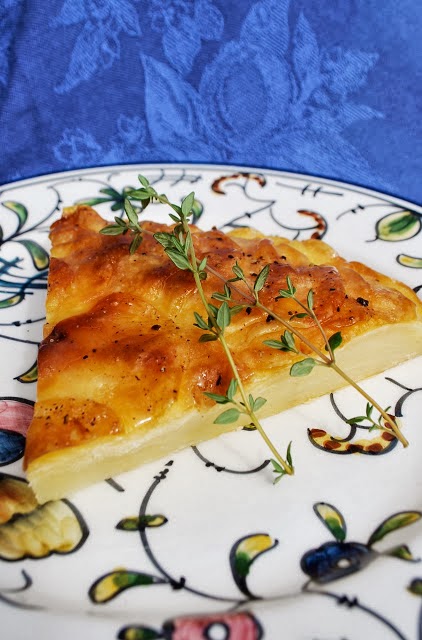
Pommes Anna: Crisp, Golden & Buttery Perfection


Pommes Anna is a grand name for what is essentially a dish of sliced potatoes baked in a very large amount of melted butter. Four ingredients are all that is required — potatoes, butter, salt and pepper. This very simple classic French recipe is all in the preparation and presentation, and the use of very, very thinly sliced potatoes. And since the dish is inverted, it's important that the first layer of potatoes be attractively arranged.

A simple, elegant, decadent and outrageously delicious side dish, Pommes Anna was created in 19th-century Paris when Adolphe Dugléré, chef of the Café Anglais, created it for his favorite customer, the celebrated courtesan Anna Deslions. The legendary allure of Pommes Anna is a buttery, soft potato cake on the inside, and a crisp, golden buttery crust on the exterior. I find that two simple tricks help to achieve the perfect Pommes Anna — a nonstick ovenproof skillet ensures easy release every time, and a mandoline saves an awful lot of time. This classic French dish is sinfully delicious, quite addictive, and never fails to impress as the buttery golden potato cake literally melts in your mouth.


Pommes Anna
Serves 8

6 medium russet potatoes, peeled - about 2 3/4 lb
6 tbsp butter, melted (I use ghee, which is a clarified butter)
Coarse salt and ground pepper
fresh thyme 


Preheat oven to 450°F. Using a sharp knife or mandoline, slice potatoes as thinly as possible. Don't place the sliced potatoes in water, as the starch is needed to bind the layers. 

Brush the bottom of an 8-inch cast-iron, or non-stick oven-proof skillet, with 1 1/2 tablespoons of melted butter. Starting in the centre of the pan, arrange the potato slices in a circular pattern, overlapping the edges and leaving no spaces. Evenly brush with another 1 1/2 tablespoons of melted butter and season well with salt, pepper and fresh thyme if you wish. Repeat the layering process until all the potato slices have been used, then drizzle the remaining butter overtop. Be sure to press down firmly after each layer to pack the layers together.

Place the skillet over medium-high heat until the edges of the potatoes begin to brown, about 3-4 minutes. Transfer to the oven, cover and bake for 25 minutes, then uncover and bake an additional 35-45 minutes, or until the potatoes are fork-tender, and the top is crispy and golden brown. Remove from the oven, pour off any excess butter, and let stand for 5 minutes. Using a small spatula, separate the potato edges from sides of pan. Then shake the pan and slide a spatula along the bottom to loosen the potatoes. Carefully invert the Pommes Anna onto a warm flat serving platter, garnish with fresh thyme or chopped parsley, and using a sharp knife, serve sliced into wedges. 


Friday, October 11, 2013

Butternut Squash Soup with Croutons & Crème Fraîche


Thanksgiving is a holiday steeped in food traditions. For many, the feast would not be complete without a cherished family dish on the table, whether it's a spinach gratin or homemade cranberry sauce based on the recipe from a beloved aunt or grandmother. Sometimes it's nice to enhance the menu with a few new recipes, but often we crave food that is simple and comforting. For me, nothing says Thanksgiving more than a luscious, silky smooth and savoury Butternut Squash Soup. Garnished with crispy croutons and fried sage leaves, this Williams-Sonoma inspired soup makes an impressive first course for any autumn dinner. The butternut squash can be steamed well in advance, leaving lots of time to prepare the croutons and crispy sage while the soup simmers, and the turkey roasts to golden perfection in the oven.


Butternut Squash Soup with Croutons & Crème Fraîche
Serves 6

5 fresh thyme sprigs
4 fresh sage sprigs
1 tbsp plus 1/4 cup olive oil
1 yellow onion, diced
1 carrot, diced
1 celery stalk, diced
1 tsp minced garlic
1/2 tsp fresh grated nutmeg
1 2-pound butternut squash, peeled, seeded and cut into 1-inch cubes
2 1/2 cups chicken or vegetable broth
12 fresh sage leaves
3 cups crustless bread, cut into 1/2-inch cubes
Kosher salt and freshly ground pepper, to taste
1 cup crème fraîche for garnish


Using kitchen twine, tie the thyme and sage sprigs into a bundle, then set aside. Steam the butternut squash until tender, about 10-15 minutes, then mash until smooth.

In a large pot, warm 1 tablespoon of olive oil over medium heat. Add the onion, carrot, celery, garlic, nutmeg and cook, stirring occasionally, for 5 minutes. Add the butternut squash purée, broth and herb bundle. Bring to a simmer and cook for 10 minutes.

Meanwhile, in a large sauté pan over medium heat, warm the 1/4 cup olive oil. Add the sage leaves and cook until dark green and crispy, about 30-60 seconds. Using a slotted spoon, transfer the fried sage leaves to a paper towel-lined plate. Add the bread cubes to the same pan and cook, tossing occasionally, until browned and crispy, about 4 minutes, adding the minced sage during the last minute of cooking. Transfer the croutons to the paper towel-lined plate and season with salt and pepper.

When the soup is ready, season to taste with salt and pepper, discard the herb bundle and purée in a food processor or hand immersion blender until smooth. Return the soup to the pot and gently rewarm when ready to serve. Ladle the soup into warmed bowls and top each portion with a dollop of crème fraîche and garnish with fried croutons and crispy sage leaves. Serve immediately. 


A Scrumpdillyicious Thanksgiving Dinner

APPETIZERS


STARTER
Butternut Squash Soup with Croutons & Crème Fraîche


ENTREE
Thanksgiving Turkey


SIDE DISHES


DESSERT