Monday, November 4, 2024

Ancient Roman Bath: UNESCO World Heritage Site


Nestled in the southern Cotswolds, the city of Bath is renowned for its historic architecture and as a UNESCO World Heritage Site due to its well-preserved Georgian and Roman architectural heritage. The Romans built the famous Roman Baths under natural hot springs, creating a centre for bathing when it was known as "Aquae Sulis", the ruins which remain one of the city's most iconic landmarks. In the 18th century, under George III, Bath developed into an elegant town with neoclassical Palladian buildings such as Robert Adam's 18th century elegant Pulteney Bridge inspired by the Rialto Bridge in Venice, and The Royal Crescent, considered to be the most prestigious address in Bath. One of the most significant Norman buildings in Bath is Bath Abbey, which was founded in the 11th century, is England's last great medieval church.

One of the great empires of the western world, the Romans arrived in Britain in AD43 following a successful invasion by Emperor Claudius. The city of Bath, or Aquae Sulis, quickly emerged. It was a strategically important site for the Romans and the presence of a burbling hot spring was revered as curing physical or spiritual suffering and illness. Constructed around 70AD as a grand bathing and socializing complex, the Roman Baths are one of the best-preserved Roman remains in the world, where steaming spring water still fills the bathing site every day. The Sacred Spring lies at the very heart of the ancient monument. Set alongside a temple dedicated to the healing goddess Sulis-Minerva, the baths form one of the world's best-preserved ancient spas. The heart of the complex is The Great Bath, a lead-lined pool filled with steaming geothermally heated water from the 'Sacred Spring'. Although now open-air, it would originally have been covered by a barrel-vaulted roof, and included the caldarium (hot bath), tepidarium (lukewarm bath), and frigidarium (cold bath). The Kings Bath was added in the 12th century, The Queens Bath in the 16th century and the upper terrace promenades in the 18th and 19th centuries.

These days, the museum houses artefacts from the Roman period, including objects that were thrown into the Sacred Spring, presumably as offerings to the goddess and include more than 12,000 Denarii coins, which is the largest collective votive deposit known from Britain. A gilt bronze head of the goddess Sulis Minerva, which was discovered nearby in 1727, is also displayed, and is one of the best known objects from Roman Britain. One of the more curious items in the collection are a series of 'Roman Curse Tablets', personal and private prayers of 130 individuals inscribed on small sheets of lead or pewter. Believed to range in date from the 2nd to the late 4th century AD, the tablets were rolled up and thrown into the Spring where the spirit of the goddess Sulis Minerva dwelt. They are mostly from people who had suffered an injustice, asking for wrongs to be put right and for revenge. In 2014, the curse tablets were inscribed on the UNESCO Memory of the World UK register.


Founded in the 11th-century Bath Abbey is one of the most significant Norman buildings in the city

After the dissolution of the monasteries in 1539 by order of King Henry VIII, 
the abbey lay in ruins for more than 70 years

There are more than 2400 historic memorial stones on the floor of the Abbey

Majestic candelabrum hangs from the Abbey's spectacular stone fan vaulted ceiling

The abbey's ceiling is considered one of the best examples of ribbed fan vaulting in England

View of the Abbey Nave through a vase of fresh flowers

Abbey Lectern with Bible open for the evening's sermon

Effigy of James Montagu, Bishop of Bath 1608-1616, 
who arrived when the Abbey was roofless and personally paid for it be rebuilt

Stained Glass of 'Crowning of King Edgar', who was the first King of All England crowned in 973,
and whose reign was one of peace and prosperity

King Edgar came to power in 959, uniting a fractured England and introducing a period 
of calm and stability, something unheard of in medieval kingship

View of the Abbey from the Roman Baths

Entrance to the Roman Baths 
inside an old concert hall, is where we joined a guided tour

Colonnade of sculptures along the upper terrace

Flaming torches provides a glimpse of how the baths were illuminated in ancient times

The green hue of the pool is due to algae, caused by the water's exposure to the open air, however when the pool was roofed over in Roman times, its waters were crystal clear

Reflection of the Abbey and blue sky in the pool of the ancient Roman Baths

Statues of Roman emperors and governors of Britain line the edge of the terrace over looking 
the baths, and were carved for the opening of the Roman Baths to the public in 1897

View of Bath Abbey from the main level of the Roman Baths

A beautiful couple were being photographed in the Baths for their upcoming wedding

Our tour started on the main level of the Baths

Lovely reflections in the pool on a sunny day with fluffy white clouds


The King’s bath had niches installed into the sides of the pool where bathers 
could sit in the curative waters, which is where the sacred spring comes up

The Romans built the baths over the Aquae Sulis, or Sacred Spring, a geothermal spring that can be seen bubbling up, known as the Fons Sulis, and which is believed to have healing powers

Water from the hot springs flows in to the main pool

The Roman Baths lay undiscovered for many years, but in 1727 a life-sized head, the remains of a statue of the goddess Minerva, was uncovered while sewer workers were digging in the area

Bath High Street

The Ivy Bath Brasserie & Garden

The lush interior of the Ivy Brasserie in Bath

The colourful Ivy lunch menu

The Bartender pouring our champagne

A lovely cold glass of Veuve Clicquot Brut

Capocollo with celeriac rémoulade and toasts

Salt and Pepper Squid Tempura with Miso, wasabi mayonnaise, Sriracha, coriander and lime
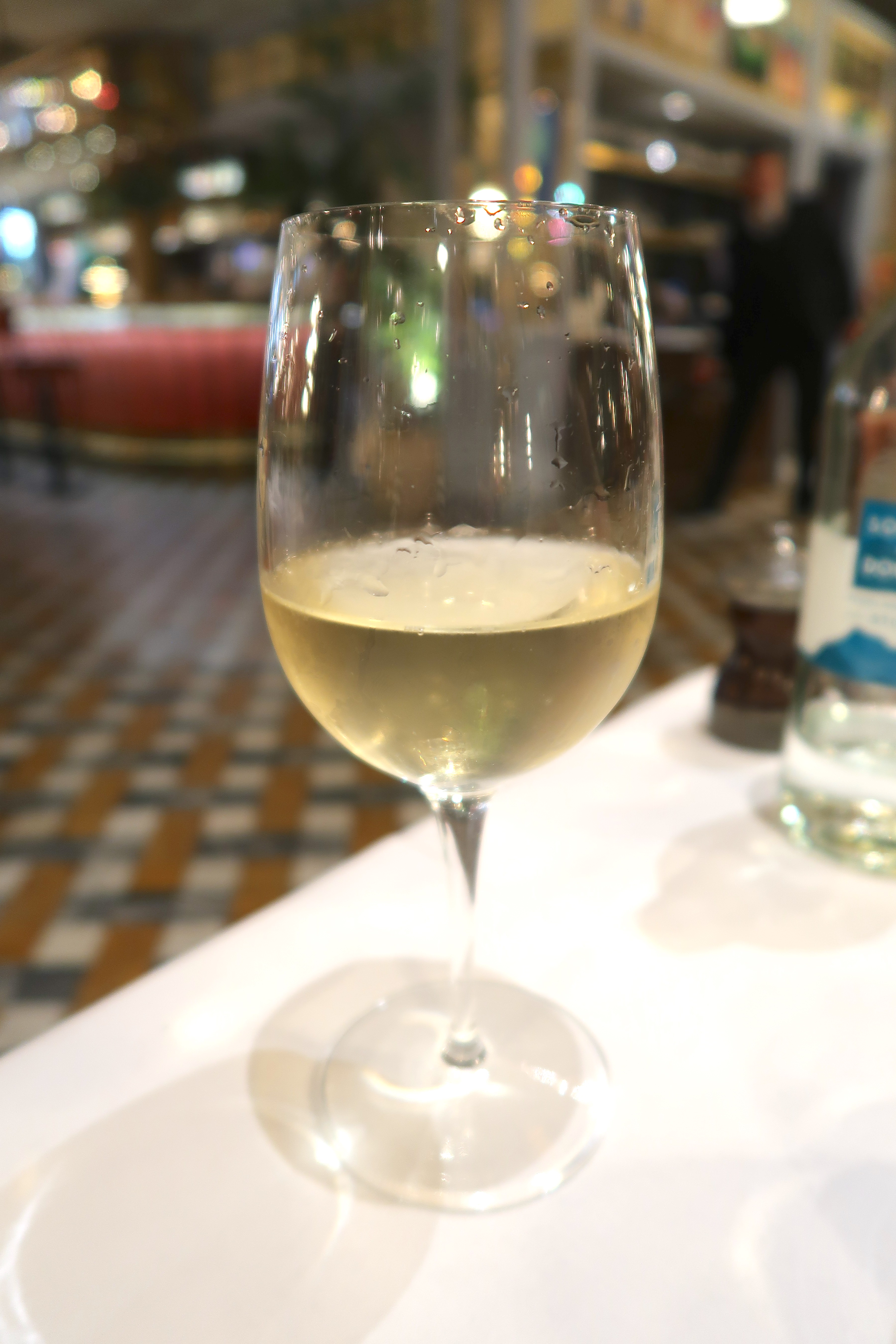
Gavi di Michele Chiarlo, Piedmont, Italy

The Ivy Classic Shepherd’s Pie with slow-braised lamb and beef with Cheddar mash, 
rosemary and red wine sauce

Garden Peas with Broad Beans and Baby Shoots

Côtes du Rhône by André Brunel, Southern Rhône, France

Wild Mushroom and Truffle Linguine with rocket and parmesan cheese

Espresso Coffee Crème Brûlée with butter shortbread

Profiteroles with Vanilla Iced Cream, Warm Chocolate sauce and Gold Flakes


Sticky Toffee Pudding 
Serves 4
Recipe courtesy of The Ivy

For the date base:
200g stone less dried dates 
200ml water

For the date base, place both ingredients in a pan and boil and then simmer for 3 minutes until the dates are soft. Remove from the heat, liquidise and cool down.

For the pudding:
45g unsalted butter, room temperature 
140g soft dark brown sugar 
2 large free range eggs 
170g date base (see above) 
170g plain flour 
1 tsp baking powder

For the fudge sauce:
175g caster sugar 
50ml water 
50g glucose  
10g unsalted butter 
340ml double cream


Pre-heat the oven to 350°F.

For the pudding, cream the butter and sugar in a food processor, slowly add the eggs, mixing well. Add the date base. Sieve in the flour and baking powder, and carefully fold by hand into the mix. Pipe or spoon into well-greased ramekins up to 3/4 full, and bake for 17-20 minutes until golden brown. If you stick a knife in, it will come out clean. Allow to cool a little and remove from the ramekins.

The fudge sauce can be made while the sponges are being cooked. Dissolve the sugar into the water in a deep, thick-bottomed saucepan, washing the sides of the pan down with the water so that there are no visible sugar crystals showing. Place on a medium heat until the mixture begins to boil. At this stage, add the glucose and again wash down any visible sugar on the sides of the pan. Increase the heat. Once the sugar is a caramel colour, gently stir in half the cream and butter. Please do this carefully to avoid burning yourself! Remove from the heat and leave to cool for 5 minutes and then add the rest of the double cream. Sieve the fudge and keep to one side.

To assemble, the puddings slice off the tops and discard (or eat!). Cut each one horizontally into 3 discs. Re-heat the sauce. Then, put one disc back into the ramekin. Add sauce and repeat the process until all 3 discs are done – covering the top with a little sauce so that the sponge is doused in the sauce. Press down with the back of a spoon. Cover each with clingfilm and leave in the fridge for at least a couple of hours, or overnight.

Pre-heat the oven to 350°F. Put some water into a deep baking tray, but not so much that it would cover the ramekins, and put the ramekins into the tray. Bake in this bain-marie for 12 minutes. At The Ivy, we serve this with vanilla ice cream. You can use this or crème fraiche.




Friday, November 1, 2024

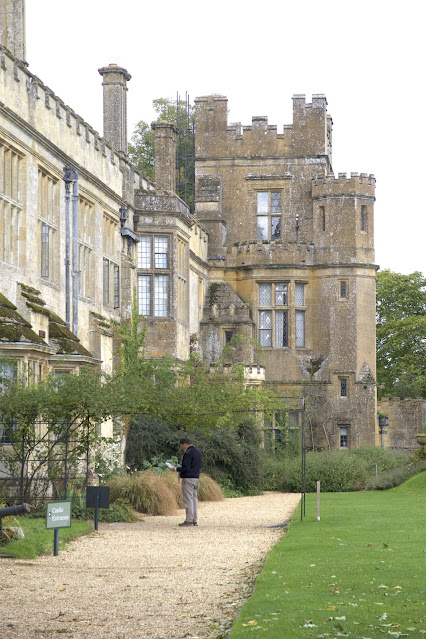
Sudeley Castle in the Heart of the Cotswolds


Located in the heart of the Cotswolds, Sudeley Castle and Gardens have played an important role in England's history for over 1000 years. It remains the only private castle to have a queen buried within the grounds, Queen Katherine Parr, the last and surviving wife of King Henry VIII, who lived and died at Sudeley and buried in St. Mary's Church on the castle grounds. Henry himself, Anne Boleyn, Lady Jane Grey, Queen Elizabeth I and Richard III have all played a part in Sudeley’s story. On ascending the throne in 1509, Sudeley became one of Henry VIII's royal residences, but after his death in 1547, Edward VI granted Sudeley Castle to his uncle, vain, handsome and ambitious Sir Thomas Seymour. Seymour was made Lord of Sudeley and married Henry VIII's widow, Katherine Parr. As the daughter of Henry VIII, Elizabeth was welcomed to their home at Sudeley Castle, when her stepmother married Thomas Seymour.

Thomas’s marriage to Katherine brought him into close contact with Elizabeth who was blossoming into an attractive young woman. Seymour began making advances towards the princess and the ensuing scandal thrust Elizabeth abruptly into the harsh adult world. When Katherine died in 1548, shortly after giving birth, Seymour decided he could further his political ambitions by marrying Elizabeth and seizing control of the King. He was arrested in January 1549 and executed for treason by his brother, the Lord Protector, in March 1549. Elizabeth was interrogated about her part in the plans but skillfully denied the charges of treason and was eventually exonerated.

King Charles I found refuge at Sudeley Castle during the Civil Warwhen his nephew Prince Rupert established headquarters at the Castle, but when Oliver Cromwell and his Parliamentary troops attacked and destroyed the castle at the end of the Civil War, Sudeley lay neglected and derelict for nearly 200 years. Then in 1837, Sudeley was rescued by the wealthy Worcester glove-makers, brothers John and William Dent, who began an ambitious restoration programme, which was continued by their nephew, John Coucher Dent, when he inherited the castle in 1855. His wife, Emma Brocklehurst, threw herself enthusiastically into Sudeley’s restoration, at the same time forging strong links with the nearby town of Winchcombe. It is the results of Emma’s dedication that are so evident in the gardens and exhibitions at Sudeley today.

The Castle and Gardens are now the home of Lady Elizabeth Ashcombe, her son, daughter and their families, who are committed to the continued preservation of the castle, its treasures and the ongoing restoration and regeneration of the gardens. Having visited Sudeley Castle as a young girl on a school trip with my school when we lived in Buckinghamshire in the early 70's, it was truly a trip down 'Memory Lane' and a very special day indeed.


Pathway to the Tithe Barn ruins

 One of the remaining original Sudeley buildings, the Tithe Barn dates back to the 15th Century
and was used storing rents and tithes from farmers required to give one-tenth of their produce

Queen Elizabeth I visited Sudeley Castle, the most famous visit being an epic three-day 
party, one of the largest and most expensive in British history, to celebrate the 
4th anniversary of the defeat of the Spanish Armada

Life-sized elephant sculptures form a unique trail weaving through the gardens 
as part of an environmental art campaign, CoExistence, which highlights the loss of biodiversity 
caused as humans encroach on wild spaces across the globe

The Moorish Knot Garden was created by Jane Fearnley-Whittingstall in 1995,
fashioned after a traditional Tudor Knot Garden

Ruins of the Richard III's Great Banqueting Hall

Sudeley Castle was the base for Richard III during the War of the Roses,
but who died at the Battle of Bosworth in 1485

The ruins of the 15th-century Banquet Hall are sometimes brought back to life with 
chandeliers and extravagant floral displays for weddings

Sudeley lay neglected and derelict for nearly 200 years before its purchase in 1837 by glovemakers John and William Dent, who used their wealth to fund a significant restoration programme

13th-century stones from the oldest area of Sudeley Castle were a decorative device 
on churches, but after the dissolution of the Monasteries by Henry VIII in 1536, 
stones such as these are enormously rare

15th-century St. Mary's Church where Queen Katherine Parr is entombed

The last of Henry VIII's six wives, Catharine Parr lived and died at Sudeley,
where she still remains today entombed in the beautiful 15th-cenury church on the castle grounds

Marble tomb of Katherine Parr who was the last of King Henry VIII’s eight wives

The Becket Window depicts the murder of Thomas Becket. 
Ralph de Sudeley was the owner of the castle at the time and it is believed his brother, 
William was one of the Knights responsible for the murder

A 'Cresset Stone' was flat stone with cup shaped hollows being used to hold a quantity of tallow and wick, which were burned to produce light in Medieval times

Lush hydrangea outside St Mary's Church

15th-century side door to St Mary's Chapel 

View of Castle from St. Mary's Church

The Secret Garden is hidden on one side by a large yew hedge and on another by a stone wall, 
found through an archway of roses alongside St Mary’s Church 

Garden sculpture in The Secret Garden, 
said to be one of the most romantic gardens in the Cotswolds

The East Wing of the Castle is home of Elizabeth, Lady Ashcombe, her son, 
daughter and their families

The castle walls surround the Mulberry Lawn, located within the award-winning gardens 

Fields around the castle are home to grazing sheep

Flower urn overlooking Sudeley Castle Queen's Gardens,
 so named because four of England’s queens, Anne Boleyn, Katherine Parr, Lady Jane Grey, 
and Elizabeth I, once walked upon the original Tudor Parterre

Emma Dent must be credited for the luxurious double-planed yew hedges 
that encase the Queen's Garden and the revival of the gardens

My husband Guy sitting on a bench in front of Queen's Garden Fountain

The newest addition to Sudeley Castle's Wildlife Trail is a giant seven by three-foot hedgehog


The Lion Inn is a beautifully restored 15th-century coaching inn located in the 
picturesque town of Winchcombe in Gloucestershire, near Sudeley Castle

The Pub at The Lion Inn

Our snug little table in the Lion Inn Pub

Butcombe Gold beer-battered haddock and thick-cut chips with tartare sauce and minted peas

Steak and Ale Pie with mashed potatoes and gravy

Dark Chocolate Fondant with crème fraîche sorbet and berries