
Tuesday, May 22, 2012

Vertical: Giacomo Pasquini's Flavours of the Adriatic


Tucked away in the heart of Toronto's Financial District is Vertical, a sleek and sophisticated restaurant specializing in the deliciously diverse regional cuisine of Italy and the Mediterranean. Partners Joe Alberti and Gary Chivers launched Vertical Restaurant & Bar in 2005 on the mezzanine level of First Canadian Place, and has since become a beacon for Bay Street power execs who flock to its stylish bar for after work drinks, as well as its prime outdoor mezzanine patio + lounge which overlooks the parkette and waterfall of First Canadian Place facing King Street — a hidden gem for those in the area. But the real lure here is chef Giacomo Pasquini’s glorious ingredient-driven Italian cuisine.


Vertical's summer outdoor patio - a hidden gem


Born and raised along the Adriatic coast in the Le Marche region of central Italy, Chef Pasquini learned a passion for seafood at an early age. Working with  some of the top chefs of Italy and a handful of Michelin-starred restaurants throughout Italy, including Palazzo Sasso in gorgeous Ravello, where my husband and I had lunch one afternoon on our honeymoon almost ten years ago. True to his heart, Vertical's menu reflects his passion for simple exquisitely prepared Italian cuisine with dishes such as whole grilled fish, fresh homemade pasta and seasonal specialties inspired by Italy's focus on simplicity and freshness with a menu prepared with a lighter, healthier style typical of Mediterranean influenced cuisine.


Executive Chef Giacomo Pasquini (R) with his stellar kitchen crew


Vertical's  elegant and sophisticated dining room showcases Chef Pasquini's outstanding Italian cuisine. Designed by Toronto-based agency Mackay|Wong, the interior of warm chocolate coloured woods, gauzy curtains, modern Riedel steamware and contemporary table settings, create a stylish and inviting space with a mood of relaxed intimacy with highlights of rich colour and plush seating. Modern yet unpretentious, both the interior design and culinary artistry of Chef Pasquini are simpatico.


Warm chocolate coloured woods, gauzy curtains and elegant table settings 
make Vertical an elegant and inviting dining destination


We started our evening at Vertical with a lovely 2009 bottle of Ceregio Sangiovese from Emilia-Romagna, which was also one of twenty wines available by the glass or in unique individual 9-ounce carafe called a 'quartino'. Chef Pasquini's inspiring dinner menu was composed into small shared appetizers to whet the appetite such as Warm Black Olives, Prosciutto di Parma, Crostini with goat cheese and ramps, and Burata with a zucchini, eggplant and mint caponota with pine nuts and crostini. We were drawn to the bowl of Warm Black Olives which were flavour-infused with balsamic and herbed olive oil, and served with warm homemade focaccia. The little Niçoise and Italian Gaeta olives were transformed — an explosion of soothing sweet and pungent flavours. An old Italian tradition, the warm olives were the perfect aperitivi to start our meal.


Warm black olives with a balsamic and herbed oil with focaccia


The selection of fabulous starters, homemade pasta, risotto, fish and meats on Chef Pasquini's menu, all sounded so delicious and authentically Italian, it was very difficult to choose among all the wonderful dishes. An ardent fan of fish and seafood, I had to order the Warm Calamari with smoked dates and clams in a squid ink dressing. Perfectly cooked, the calamari was soft and delicate, and the squid ink dressing, rich, thick and delicious with a subtle saltiness that provided the perfect counterpoint to this gift from the sea. We also also ordered the Beet Salad with Monforte Toscano cheese, mustard greens and hazelnuts, which was a marriage of red, yellow and candy cane beets, served both as roasted and raw spirals in a light dressing.


Pan Fried Calamari with clams, smoked dates in a squid ink dressing

Beet Salad with Monforte Toscano cheese, mustard greens and hazelnuts


As entrées we selected the special Risotto which changes daily, based on the freshest seasonal ingredients. Tonight it was a wonderfully flavourful Asparagus Risotto with shallots and pea shoots, as well as a Whole Grilled Branzino served with locally grown cherry tomatoes and sautéed fennel with a tomato confit and caper sauce. I'm always drawn to fresh whole grilled fish on a menu, if it's featured. Chef Pasquini's grilled Branzino was excellent. Moist and flakey, the flesh was perfectly cooked and housed in a crisp salty skin. The kitchen even magically de-boned the fish which made not having to navigate the tiny bones a welcome surprise.


Asparagus Risotto

Whole Branzini topped with tomato confit and capers, braised fennel 
and a drizzle of lemon sauce


During our meal I asked our server Sarah (aka Sam), if Chef Pasquini was in the kitchen that evening. When she said that he was, I asked if would be possible to meet him, if he had a moment — which most chef definitely do not. Within a few minutes, Chef Giacomo Pasquini arrived at our table, smiling with hand outstretched. Having just returned from two weeks in Umbria, I felt a compatriot spirit with this young and good looking Adriatic Marchigian. The spirit of his cuisine is empathetic with the exceptional cuisine we experienced throughout Italy, and he was pleased when I mentioned the authenticity and inspired flavours of his cuisine. We compared experiences and our love of Italy's phenomenal food, extraordinary culture, inspiring landscapes and warm-hearted people. I may have been gushing, but my admiration of our meal was straight from the heart. He was also moved by my sincerity and even offered to lend us his apartment in Le Marche the next time we were in Italy! Great food, a lovely inviting dining room, professional courteous service and a young talented chef just a few blocks from home — will I be back? Absolutamente!




Monday, May 21, 2012

Roasted Vegetable & Ricotta-Goat Cheese Tart


A festive Mediterranean inspired Roasted Vegetable & Ricotta Tart with Goat Cheese and Olives, is a savoury celebration of nature's bounty. A robust full flavoured vegetable tart, there's a natural versatility to this dish that makes it easily adaptable to almost any budget and taste. Select your vegetables according to season — leeks, aubergines, broccoli, mushrooms — and you can even improvise with different cheeses or flavoured pastries. Putting your own signature on this hearty and delicious tart is part of the charm of this gorgeous recipe, originally inspired by one of my current culinary heroes — Yotam Ottolenghi. This man loves vegetables and his recipes make them shine.


Don't be put off by the length of the recipe — it's really just making the pastry and roasting the vegetables, both of which can be done ahead of time. You can even grill the vegetables on the BBQ for an easy summertime solution, or roast each of the vegetables concurrently in the oven, rather than roasting them one at a time. Finally fresh and aromatic herbs like rosemary, thyme and bay leaf wraps up the entire tart making it go from ordinary to sensational. A sprinkling of ricotta and goat cheese takes the tart to the next level with its creamy texture that binds all the aromas brilliantly. 


Roasted Vegetable & Ricotta Goat Cheese Tart
Serves 8

Pastry:
2 cups all-purpose flour plus more
3/4 tsp salt
1/2 tsp sugar
10 tbsp (1 1/4 sticks) chilled unsalted butter, cut into 1/2" cubes

Filling:
1 red bell pepper
1 yellow bell pepper
6 tbsp olive oil
1 medium eggplant, cut into 2-inch dice
Salt and fresh cracked black pepper
1 small sweet potato, peeled and cut into 1-inch dice
1 small zucchini, cut into 1-inch dice
2 medium onions, thinly sliced
2 bay leaves

1 tsp fresh rosemary, finely minced
2 tsp fresh thyme, plus whole sprigs for garnish
1/3 cup ricotta
4 oz goat cheese

1/2 cup dried black olives, hand-pitted and sliced
8 cherry tomatoes halved
2 medium eggs
1 cup heavy cream


For the pastry: preheat oven to 350F°. Pulse 2 cups flour, salt, and sugar in a food processor. Add butter, and pulse until the mixture becomes a coarse meal with pea-size lumps. Drizzle 3 tablespoons of ice water over the mixture. Pulse until a moist clumps forms, adding more ice water by the teaspoon if it's too dry. Gather the dough into a ball and flatten into a disk. Wrap in cling film and refrigerate until firm, at least 1 hour or up to 2 days.

Lightly grease an 9-inch tart tin with a removable base. Roll out the pastry into a circle roughly 1/8-inch thick and large enough to line the base and sides of the tin, plus extra to hang over the edge. Carefully line the tart case with the pastry, making sure you don't puncture it. Press the pastry so it covers the base and sides of the tin, with the excess hanging over the edge.

Line the pastry base with a sheet of parchment paper, making sure it covers the base and sides, and fill it with ceramic baking beans. Bake for 40 minutes. Once done, carefully remove the paper with the beans. Give the pastry another 10 minutes in the oven until it turns golden brown. Remove from the oven and let cool.

For the filling: preheat oven to 450F°. Remove the seeds and pith from the red peppers and transfer to a small baking dish. Drizzle with 2 tablespoons of oil. Roast on an upper rack, turning the peppers occasionally until tender, about 40 minutes. Then transfer peppers to a small bowl and cover with cling film. Let stand for 15 minutes then peel the peppers and julienne into strips. Set aside.

Meanwhile, toss the eggplant with 4 tablespoons of oil in a small bowl, and toss to coat. Season with salt and pepper. Spread the eggplant out in a single layer on a rimmed baking sheet and roast on lower rack for 10 minutes. Add the sweet potato and zucchini to the eggplant and mix gently. Continue roasting until the eggplant, sweet potato and zucchini are tender, about 20–25 minutes longer, then set aside.

Line another rimmed baking sheet with parchment paper. In a medium bowl, toss the sliced tomatoes with 1 tablespoon of balsamic vinegar, 1 tablespoon of oil and a pinch of salt and pepper. Arrange the tomatoes, skin side down, on the prepared sheet and roast on a lower rack until the tomatoes are beginning to brown and are tender but not mushy, about 20 minutes. Set aside.

Meanwhile, heat the remaining 4 tablespoons of oil in a large skillet over medium-high heat. Add onions, fennel and bay leaves and cook, stirring frequently, until the vegetables start to caramelize, about 15-20 minutes. Season with salt and pepper. Using a slotted spoon, transfer to a paper towel-lined plate. (Note: all of the vegetables can be prepared 1 day ahead. Cover separately and chill).

Preheat oven to 350F°. Scatter the cooked onion-fennel mixture over the bottom of of the crust and top with the other roasted vegetables and olives, evenly spread on top. Scatter with 1 teaspoon of fresh thyme, top with cheeses and then with the halved tomatoes, cut-side up.

Whisk the eggs and cream in a small bowl, and season lightly with salt and pepper. Slowly pour the egg mixture over the vegetables then scatter the remaining 1 teaspoon of rosemary and thyme overtop. Bake the tart until filling is set and the pastry is golden brown, 50–60 minutes. Remove from oven and allow to rest for at least ten minutes before serving warm or at room temperature.


Friday, May 18, 2012

Baby Bok Choy & Shiitake Mushrooms


There are few vegetables that are more part of the Chinese culinary character than bok choy, a wonderfully versatile green leafed vegetable that’s also known as Chinese cabbage. There are over twenty varieties of bok choy available, but I especially like the taste and texture of baby chok choy or as it's sometimes known — Shanghai bok choy. The tender stalks of bok choy go well with fresh ginger and meaty shiitake mushrooms quickly sautéed with slivered onions and an aromatic elixir of sesame oil, mirin and tamari. The results are fragrant, flavourful and relatively fat-free and the perfect accompaniment to delicious Miso-Marinated Black Cod.


Baby Bok Choy & Shiitake Mushrooms
4-6 servings

1 tbsp toasted sesame oil

1/2 tbsp olive oil
1 small yellow onion, sliced into strips

1/2 tbsp fresh ginger, minced
1lb baby bok choy, halved length-wise

8 oz fresh shiitake mushrooms, sliced

1 tbsp mirin

1 tbsp tamari

1 tbsp sesame seeds

Heat the oil in a large skillet. Add the onions, turn the heat down and cook for 5 minutes, stirring occasionally. Add shiitakes, bok choy, mirin and tamari. Cover and cook 3 minutes. Spread on a flat surface to cool and stop greens from cooking. Garnish with toasted sesame seeds. 


Serve with Miso-Marinated Black Cod and a bowl of steamed Jasmin rice for a delicious, heart-smart and easy dinner. 


Thursday, May 17, 2012

Nobu's Miso-Marinated Black Cod


Miso-Marinated Back Cod is a signature dish of Japanese chef Nobu Matsuhisa, whose exquisite cuisine has won him accolades for years, and helped build a restaurant empire that now spans the globe – from NYC to Tokyo, Australia, Dubai, Moscow and London. Black cod, also known as Sablefish, isn't actually a cod at all, but has a similar taste and appearance of cod. Moist and delicate with sweet soft flesh, black cod is reputed to have even higher levels of healthy omega-3 fatty acids than salmon. There are many ways to prepare black cod but it's commonly prepared with miso, a fermented soybean paste, which is used as a marinade or a glaze on the fish before being baked.


My succulent Miso-Marinated Back Cod: rich, moist and delicate - and perfectly caramelized


Nobu's fabulous miso-based marinade produces spectacular results with fatty or oily fish such as salmon, sea bass, yellow tail and scallops as well as chicken, pork and beef, but best of all — Black Cod. An ancient Japanese method for flavouring fish, Saikyozuke cures the flesh slightly and permeates it with a delicate flavour, and the grilling caramelizes and glazes the surface, leaving the fish wonderfully succulent. 


Simple ingredients: Sake, Mirin, White Miso Soybean Paste and sugar. 
Sweet white miso is sweet and light in taste, colour and texture and is fermented 
for just two to eight weeks, as compared to other miso types which are usually 
fermented for three years or more.


Miso, a fermented paste made from soya beans and rice, barley, wheat or rye, is used in Japanese and South East Asian cuisine, and imparts a deeply savoury, rich intensity to any dish that's cooked with it, from classic miso soup to marinated and grilled fish, fowl or vegetables. This Japanese method for preparing fish has been around for centuries, but became trendy after superstar chef Nobu made it famous. I first fell in love with Miso-Marinated Black Cod years ago at Nami in Toronto. 


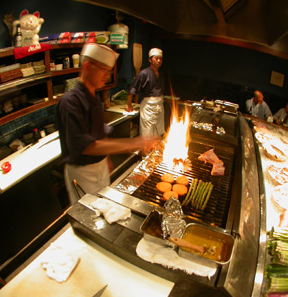
Peter at the helm of Nami's Robata Grill


Peter, a lovely Japanese gentleman, is the master of Nami's robata grill, where he serves made-to-order grilled seafood, vegetables and meats to devoted customers. His Miso-Marinated Black Cod is the best I've ever tasted, with firm, thick pinky-white flesh that's as soft and rich as a well marbled steak. Even the skin is delicious, having been transformed by the sweet, smoky miso glaze. Wishing to reproduce Peter's succulent black cod at home, I use Nobu's classic recipe with delectable results every time! 


Miso-Marinated Black Cod (Gindara no saikyozuke)
Serves 4
Adapted from 'Nobu: The Cookbook'

For the Nobu-style Saikyo Miso Marinade:
1/4 cup sake

1/4 cup mirin

4 tbsp white miso paste

3 tbsp sugar

For the fish:

4 black cod fillets, about 1/2 pound each


Bring the sake and the mirin to a boil in a medium saucepan over high heat. Boil for 20 seconds to evaporate the alcohol. Turn the heat down to low and add the miso paste, mixing with a wooden spoon. When the miso has dissolved completely, turn the heat up to high again and add the sugar, stirring constantly with the wooden spoon to ensure that the bottom of the pan doesn't burn. Remove from heat once the sugar is fully dissolved. Cool to room temperature.

Pat dry the black cod fillets thoroughly with paper towels. Slather the fish with the miso marinade and place in a non-reactive dish or bowl and cover tightly with plastic wrap. Nobu suggests leaving the cod to steep in the refrigerator for 2 to 3 days. However, I cheated and had it on the grill within 4 hours and it was delicious.

Preheat the oven to 400°F. Preheat a grill or broiler. Lightly wipe off any excess miso clinging to the fillets but don't rinse it off. Place the fish on the grill, or in a broiler pan, and grill or broil until the surface of the fish turns brown. Then bake for 10 to 15 minutes.

At Nami, Peter spears the black cod with 2 fine skewers and suspends it over an open grill, then turns the fish and tents it with aluminum foil until it's done. Inspired by his method, I like to grill the fish on a pre-heated BBQ, and cook it until the surface of the fish caramelizes nicely, turns golden brown and flesh becomes flakey. It works deliciously well, however broiling the fish keeps the flesh more intact and makes for a tighter presentation. Both taste great!


Wednesday, May 16, 2012

Creamy Tomato Basil Soup


Rich, creamy and bursting with summertime flavour, this bright and delicious Tomato Basil Soup is the perfect balance of fresh fragrant herbs and delicate seasonings. A duet of diced onions and carrots are gently sautéed then simmered together with Roma tomatoes, fresh basil and chicken stock until the soup yields its wonderful rich blend of refined Mediterranean flavours. Puréed to a lovely silky smooth texture, this simple, rich and satisfying Tomato Basil Soup is delicious on its own or perfectly partnered with a classic crisp and golden Grilled Cheese Sandwich and homemade Chipotle Ketchup.


Creamy Tomato Basil Soup
Serves 8

6 tbsp olive oil
4 large carrots, peeled and diced
1 large onion, sliced
1 cup fresh basil leaves
3 28-oz cans whole peeled Roma tomatoes
4 cups chicken stock
2 cups light cream
Salt and fresh ground black pepper to taste


In a large, heavy saucepan, heat the olive oil over medium-high heat until shimmering. Add the carrots and onion and cook until they begin to soften, about 10 minutes, then add the basil and cook until the vegetables are completely soft, about 5 minutes more.

Add the tomatoes and broth, bring to a boil, then reduce heat and simmer 30-45 minutes. Allow the soup to cool a little bit, then purée using an immersion blender or food processor, until smooth. For a lovely silky texture, strain the purée before returning the soup to the pot.

Stir in the cream over over low heat, until the desired texture is reached and the soup is just warmed through. Season to taste with salt and pepper, and serve warm. Garnish with a sprig of basil or chives and a swirl of cream.


The Ultimate Grilled Cheese Sandwich
Serves 4

8 tbsp unsalted butter, softened
8 1⁄2" thick slices sourdough bread
16 oz comté cheese, grated


Spread butter evenly on both sides of each slice of bread. Put half the cheese on one slice and half on another. Top each with remaining bread slices. Heat a 12" cast-iron skillet over medium-low heat. Add sandwiches to skillet and cook, flipping once with a metal spatula, until they're golden brown and crusty on both sides, about 18–20 minutes. Transfer the sandwiches to a cutting board and slice in half with a knife. Serve warm with hot steaming bowls of Tomato Basil Soup.


Homemade Chipotle Ketchup
Makes 1 cup

1 cup ketchup
3 tbsp puréed canned chipotle in adobo
1/4 tsp kosher salt
1/4 tsp freshly ground black pepper

Whisk together the ketchup, chipotle, salt and pepper in a small bowl. Cover and refrigerate for at least 30 minutes to allow the flavours to meld. The sauce will keep for 1 week in a tightly sealed container in the refrigerator.


Tuesday, May 15, 2012

Grilled Fresh Sardines with Lemon & Herbs


Grilled Sardines on the BBQ are one of the delectable signs of summer, and one of my warm weather favourites. Among the most sustainable seafood choices, sardines are rich in omega-3 fatty acids and have very low levels of mercury relative to larger fish, which makes them both a healthy and delicious food choice. Also, just three ounces contains more calcium than a glass of milk. I usually buy fresh sardines from my local fishmonger at Toronto's St Lawrence Market and get them to gut and clean the little guys so I don't have to! The crispy, smoky skin and moist, tender flesh that results from the BBQ grilling method in this fabulous recipe, makes an irresistible culinary combination.


Sardines stuffed with fresh thyme and marinated in olive oil, salt, pepper and hot chili flakes
and topped with some fresh sprigs of rosemary


The sardines are best rinsed, drained and dried before marinating in olive oil and seasoned with coarse sea salt, fresh cracked black pepper and a light sprinkling of dried chili flakes. I like to tuck a sprig of fresh thyme inside each of the sardines for extra flavour, and top with sliced lemons and fresh rosemary. Covered and refrigerated, the sardines can be left to marinate from 30 minutes up to 2 days. The sardines and slices of lemon are then placed on a pre-heated grill which has been lightly brushed with some olive oil to prevent the fish from sticking, and barbecued for about 2 to 3 minutes per side, turning just once to ensure the skin becomes golden brown and crispy. 


The sardines and lemons doing they're lovely thing on the BBQ


Garnished with grilled lemon and some fresh herbs, I finished the grilled sardines with some fennel fronds that I had on hand, which added a lovely subtle anise flavour to the dish. Fast and delicious, this easy protein-rich recipe for Grilled Fresh Sardines with Lemon & Herbs is a terrific dish for the sultry days of summer, and makes a fabulous first course or light summer supper with a simple Mediterraean-inspired salad. 


Grilled Fresh Sardines with Lemon & Herbs
Serves 2

4 fresh Sardines, about 6-8" each, cleaned by your fishmonger

1 tbsp coarse sea salt
1 tbsp coarse ground black pepper
1/4 tsp dried chili peppers
4 sprigs of thyme
2 sprigs of rosemary
1/4 cup olive oil
1 lemon, sliced

Select 4 healthy bright eyed sardines from your local fish market and get the fish monger to gut and clean the fish for you. 

Before marinating the sardines, rinse out the cavities and drain well on some paper towel. Dry well with paper towels and lay them on a platter. Tuck one long sprig of thyme inside each of the sardines, then pour 1/4 cup of olive oil over the fish, making sure the fish are well covered top and bottom — I like to use my hands to do this. Season with coarse sea salt, fresh ground black pepper, a sprinkling of dried red chilis and top with two sprigs of fresh rosemary. Place some sliced lemon around the fish, coating with some oil from the platter. Cover the platter with cling film, refrigerate and allow to marinate for at least 30 minutes and up to 24-hours, turning and re-seasoning the fish once or twice. 

To cook the sardines, place the fish and lemon slices on a pre-heated BBQ and lightly brush the grill with some oil so the fish don't stick. Break the rosemary over the fish once they go on the BBQ. Grill the sardines 2 to 3 minutes per side, turning them only once to ensure the skin becomes golden brown and crispy. Serve with the grilled lemon and garnish with some fresh herbs. I had fennel fronds on hand which added a subtle anise flavour to the sardines.


Monday, May 14, 2012

African Chicken, Peanut & Spinach Stew


Groundnut or peanut soups and stews are extremely popular in the cooking of Ghana and Mali in West Africa, where it’s called Hkatenkwan. In fact, some consider African Chicken Peanut & Spinach Stew to be one of the most popular of all Sunday meals. Chicken is usually the preferred meat, but a variety of meats and seafood can also be used, including beef, lamb, smoked fish and crabs. This hearty and delicious stew is full of intoxicating flavours, robust enough for a satisfying meal on its own, or served with some steamed rice for a delicious dinner anytime of the year.


African Chicken Peanut & Spinach Stew
Serves 6-8

Recipe courtesy Hank Shaw, Simply Recipes

2-3 lb chicken thighs
3 tbsp vegetable oil
1 large yellow onion, sliced
3-inch piece of ginger, peeled and minced
6-8 garlic cloves, chopped roughly
2-3 pounds sweet potatoes, peeled and cut into chunks
1 15 oz can of crushed tomatoes
2 cups chicken broth
2 cups coconut milk
1 cup peanut butter
1 cup roasted peanuts
1 tbsp ground coriander
1 tsp cayenne
1 tsp curry powder 
1/2 tsp Tabasco or hot chilli sauce
Salt and black pepper
1/2 cup chopped cilantro
1 cup chopped spinach

Heat the vegetable oil in a large pot set over medium-high heat. Dry the chicken pieces well, then salt and brown them in the oil, setting the chicken aside as they brown.

Sauté the onions in the oil for 3-4 minutes, stirring often and scraping any browned bits off the bottom of the pot. Add the ginger and garlic and sauté another 1-2 minutes, then add the sweet potatoes and stir well to combine.

Add the chicken, chicken broth, coconut milk, crushed tomatoes, peanut butter, peanuts, coriander, cayenne, curry powder and stir well to combine. Bring to a simmer and salt to taste. Cover the pot and simmer gently for 90 minutes, or until the chicken meat easily falls off the bone and the sweet potatoes are tender.

Once cooked, remove the chicken pieces and set them in a bowl until cool enough to touch, then remove and discard the skin. Pull the meat off the bones and place the meat back in the pot, along with the chopped spinach. Adjust the seasonings and stir in the cilantro. Serve the stew by itself, or with simple steamed rice.